


 Sales Support: Walton-on-Thames: 01932 221608 Weybridge: 01932 852765
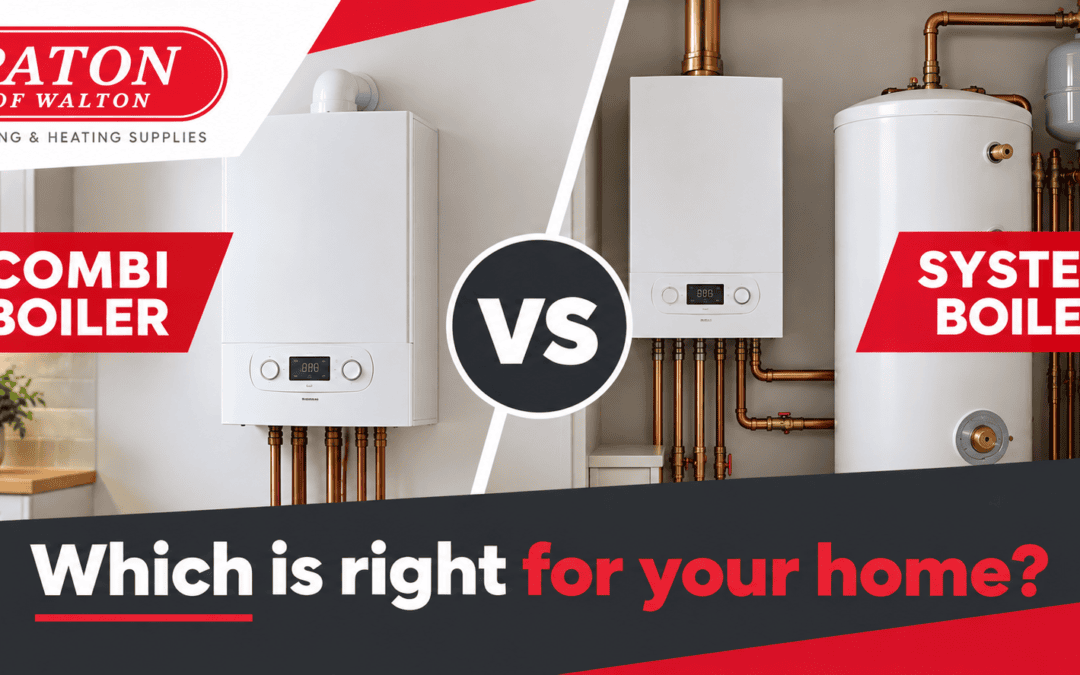
System Boiler vs Combi Boiler: Which Is Right for Your Home? Choosing a new boiler is about more than simply replacing an old appliance with a newer version. The type of boiler you choose can affect how much hot water is available, how well the system copes with several bathrooms, how much space the heating system requires and how suitable it is for the way your household actually uses hot water.
Two of the most common choices are combi boilers and system boilers.
Both can provide efficient central heating, but they produce and deliver domestic hot water differently. A combi boiler heats hot water as it is required, whereas a system boiler works with a separate hot water cylinder to store heated water ready for use.
So, which is right for your property?
What is a combi boiler?
A combination, or ‘combi boiler’, provides central heating and hot water from one compact appliance.
Rather than storing hot water in a separate cylinder, it takes water from the mains and heats it when a hot tap or shower is turned on. This removes the need for a hot water storage cylinder and the traditional cold-water tank associated with older heating systems.
This makes combi boilers particularly attractive where space is limited.
Advantages of a combi boiler
A combi boiler can offer several benefits:
- No separate hot water cylinder required
- No traditional cold-water storage tank in the loft
- Hot water is heated on demand
- Compact system with fewer separate components
- More cupboard or storage space available within the property
- A practical option for many smaller and medium-sized homes
Because the hot water comes directly from the mains, performance will depend partly on the incoming mains water pressure and flow rate.
When might a combi boiler be suitable?
A combi boiler may be worth considering where:
- The property has one main bathroom
- Hot-water demand is relatively moderate
- Space for a hot water cylinder is limited
- There is a good incoming mains water supply
- Several showers or hot-water outlets are unlikely to be required simultaneously
However, property size alone should not determine the decision. A larger property with relatively low hot-water demand could have different requirements from a smaller home where several people need showers at the same time.
What is a system boiler?
A system boiler provides central heating but, unlike a combi, works with a separate hot water cylinder.
Water heated by the boiler passes through a coil within the cylinder, transferring heat to the stored domestic water. That hot water is then available when required at taps, baths and showers.
Many of the main heating-system components are incorporated within a system boiler, and unlike a traditional regular or heat-only boiler system, a system boiler does not normally require a feed and expansion tank in the loft.
Advantages of a system boiler
A system boiler may provide:
- A stored supply of hot water ready for use
- Better support for properties with higher simultaneous hot-water demand
- The ability to work with a suitably sized hot water cylinder
- No traditional feed and expansion tank in the loft
- A good solution for many properties with more than one bathroom
Worcester Bosch, for example, describes system boilers as particularly suited to homes with multiple bathrooms and higher hot-water demand.
When might a system boiler be suitable?
A system boiler may be considered where:
- The property has two or more bathrooms
- Several people regularly require hot water around the same time
- More than one shower or tap may be used simultaneously
- There is suitable space for a hot water cylinder
- The property already has an appropriate cylinder-based system
- Stored hot water better suits the household’s usage pattern
The cylinder must still be correctly sized. Installing a system boiler with an undersized cylinder can leave a busy household short of hot water, while unnecessarily oversizing the cylinder can take up space and increase stored-water heat losses.
System boiler vs combi boiler: what’s the difference?
The biggest difference is how domestic hot water is provided.
| Consideration | Combi Boiler | System Boiler |
| Hot water | Heated on demand | Heated and stored |
| Separate cylinder | No | Yes |
| Loft feed tank | No | No |
| Space required | Generally less | More due to cylinder |
| Multiple hot-water outlets | Can be limited by available flow/output | Stored water can better support simultaneous demand |
| Hot water availability | No stored supply to run out, but delivery rate is limited | Stored supply can be depleted and then requires reheating |
| Typical consideration | Lower/moderate hot-water demand and limited space | Higher simultaneous demand/multiple bathrooms |
Neither system is automatically better. The correct choice depends on the property and how the occupants use heating and hot water.
Is a combi boiler suitable for a house with two bathrooms?
Possibly, but this is where the household’s actual hot-water requirements become particularly important.
A combi has to heat domestic water as it passes through the boiler. If two showers or several outlets demand hot water simultaneously, the available flow has to be shared.
Vaillant notes that while combis suit many homes, larger households with multiple bathrooms can demand hot water faster than a typical combi can provide, making a system boiler potentially more appropriate.
That doesn’t mean every two-bathroom property automatically needs a system boiler. Boiler output, incoming mains flow, shower requirements and typical simultaneous use all need assessing.
Does a system boiler give better water pressure?
Not automatically.
This is an important distinction because stored hot water and water pressure are not the same thing.
A correctly designed unvented hot water cylinder can provide strong hot-water performance, but its performance still depends on the property’s incoming mains supply.
A larger boiler or cylinder cannot create an adequate mains flow where one doesn’t exist.
Before choosing the system, an installer should therefore consider both water pressure and available flow rate.
Do I need a hot water cylinder with a system boiler?
Yes. A system boiler requires a separate cylinder to store domestic hot water.
That also means choosing the boiler is only one part of designing the system.
Cylinder capacity should take account of:
- Number of occupants
- Number of bathrooms
- Baths and showers
- Simultaneous hot-water demand
- Available installation space
- Required recovery performance
We’ve covered this in more detail in our guide, How to Choose the Right Hot Water Cylinder: Joule Invacyl and Cyclone Explained, including direct and indirect cylinders, sizing, slimline options and specialist configurations.
What size boiler do I need?
Boiler output is measured in kilowatts (kW), but choosing the correct output isn’t simply a matter of matching a kW figure to the number of bedrooms.
Factors include:
- Property size and heat loss
- Insulation
- Number and size of radiators
- Number of bathrooms
- Hot-water demand
- Incoming water flow
- Existing heating system
- Boiler type
Combi boilers may require a higher quoted output because the appliance must produce domestic hot water instantaneously, whereas the requirements of a system boiler are different because hot water is stored in a cylinder.
Manufacturer sizing guides can provide a useful starting point, but they should not replace a proper assessment of the property. Vaillant, for example, specifically advises consulting a professional heating engineer when selecting boiler size.
What about a regular or heat-only boiler?
Combi and system boilers aren’t the only options.
Some properties, particularly those with an existing traditional heating system, may use a regular boiler, also called a conventional, open-vent or heat-only boiler.
These systems normally work with a hot water cylinder as well as tanks in the loft. In certain older properties, retaining this type of arrangement may be preferable to converting the entire heating system.
Again, this is why simply asking “Which boiler is best?” isn’t enough. The existing system and property need to be considered as a whole.
Boilers available from Paton of Walton
Paton of Walton supplies boilers from established heating manufacturers including Worcester Bosch, Vaillant and Glow-worm.
All three manufacturers offer solutions across different property and system requirements. Current ranges include both combi and system boiler options; for example, Worcester Bosch offers Greenstar combi and system models, Vaillant offers combi, system and open-vent gas boilers, and Glow-worm’s current range includes Energy combi and Energy system boilers.
Rather than choosing on brand or boiler output alone, the right product should be matched to the property’s heating requirements, hot-water demand and existing system.
For product information and availability, speak to the Paton team at Walton-on-Thames or Weybridge.
Trade accounts are welcome.
Professional installation matters
Gas boilers must be installed by a suitably qualified Gas Safe registered engineer.
Correct specification and installation are essential for safety, performance and efficiency. The installer will also need to consider the existing heating system, controls, flue requirements and any work necessary when changing from one boiler type to another.
If you’re planning a replacement, it is therefore worth discussing the complete heating and hot-water system rather than selecting the boiler in isolation.
Frequently Asked Questions
Is a system boiler better than a combi boiler?
Neither is inherently better. A combi can be an excellent space-saving option for a property with moderate hot-water demand, while a system boiler and cylinder may be more appropriate where several outlets need hot water at the same time.
Can a combi boiler run two showers at once?
It may be possible with an appropriately specified boiler and adequate mains flow, but performance can be affected when several hot-water outlets are used simultaneously. An installer should assess the expected demand before recommending a combi.
Does a system boiler need a water tank in the loft?
A system boiler requires a hot water cylinder, but it does not normally require the traditional feed and expansion tank used by an open-vent heating system.
Does a combi boiler need a hot water cylinder?
No. A combi heats domestic hot water on demand, so a separate hot water storage cylinder isn’t required.
Which boiler is better for a large family?
A household with high simultaneous hot-water demand may benefit from a system boiler with an appropriately sized cylinder, particularly where there are multiple bathrooms. However, the decision should be based on the property’s actual requirements rather than family size alone.
Can I replace a combi boiler with a system boiler?
Potentially, but this is a change to the heating and hot-water arrangement and requires space for a suitable cylinder as well as appropriate alterations to the system. A heating engineer should assess the property first.
Where can I buy Worcester Bosch, Vaillant and Glow-worm boilers?
Paton of Walton supplies boilers from Worcester Bosch, Vaillant and Glow-worm. Contact the Walton-on-Thames or Weybridge trade counter for product information and current availability.