


 Sales Support: Walton-on-Thames: 01932 221608 Weybridge: 01932 852765
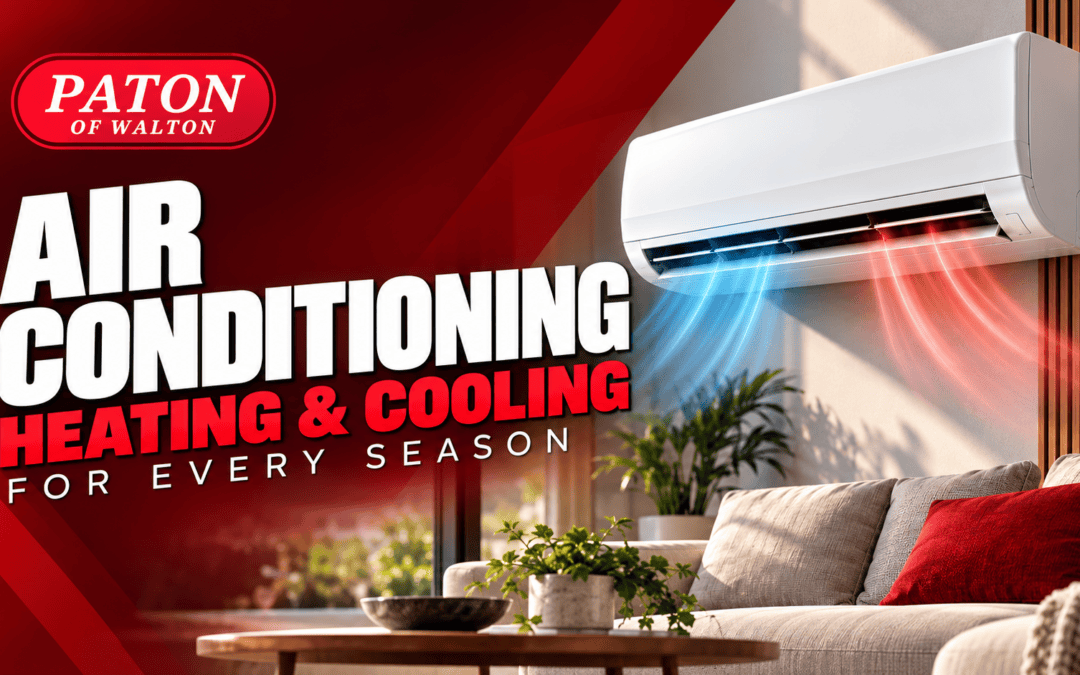
Air conditioning is often associated with keeping buildings cool during hot summer weather. However, many modern systems can provide both air conditioning for heating and cooling, helping to maintain a comfortable indoor temperature throughout the year.
Also known as air-to-air heat pumps, these systems can cool a room when temperatures rise and provide warmth during colder periods. This makes them a flexible option for homes, home offices, shops, showrooms, workplaces and other commercial premises.
Paton of Walton now supplies heating and cooling solutions from leading manufacturers, including Clivet, Panasonic, Haier, Worcester Bosch, Daikin and Ariston. We can also introduce customers to our F-Gas-certified installation partners for air conditioning and air source heat pump projects.
What is heating and cooling air conditioning?
A heating and cooling air conditioning system transfers heat between the inside and outside of a building.
During the summer, the system removes heat from the indoor space and transfers it outside, leaving the room cooler. During colder weather, this process can be reversed. The system extracts available heat from the outside air and transfers it indoors.
This reversible operation means that one system can provide:
- Cooling during warm weather
- Additional heating during colder weather
- More consistent temperature control
- Individual temperature control in selected rooms or zones
- Dehumidification on suitable systems
- Air filtration features, depending on the model selected
Rather than installing a cooling-only appliance that remains unused for much of the year, a reversible system can provide useful comfort across different seasons.
Is air conditioning the same as an air source heat pump?
Modern terminology can sometimes be confusing because there are different types of heat pump.
A reversible air conditioning system is generally an air-to-air heat pump. It transfers heat between the outside air and the air inside a room, with the conditioned air delivered through an indoor unit.
An air-to-water heat pump works differently. It transfers heat into a water-based heating system and may be used to supply radiators, underfloor heating and domestic hot water.
Both technologies use heat from the surrounding air, but they serve different purposes:
- Air-to-air systems provide direct heating and cooling through indoor air units.
- Air-to-water systems usually provide central heating and hot water through a wet heating system.
- Some properties may use one type, while others may benefit from a combination of technologies.
Understanding the intended use of the system is therefore an important first step when considering the available options.
How does a reversible air conditioning system work?
A typical split air conditioning system consists of an outdoor unit and one or more indoor units.
The outdoor unit exchanges heat with the outside air. The indoor unit circulates conditioned air around the room. Refrigerant moves through the system and carries heat between the indoor and outdoor units.
In cooling mode, heat is taken from inside the building and released outside. In heating mode, the process is reversed and heat is brought into the building.
Although winter air may feel cold, it can still contain usable heat energy. A correctly specified heat pump system can collect and transfer this energy indoors.
The exact performance will depend on several factors, including:
- The system and model selected
- The size and layout of the room
- The insulation of the property
- Windows and levels of solar gain
- The required indoor temperature
- Outdoor weather conditions
- How the system is installed and maintained
This is why proper system selection and professional installation are so important.
What are the benefits of air conditioning for heating and cooling?
Comfortable temperatures throughout the year
A reversible system can provide cooling in summer and warmth during cooler periods. This allows the same installation to support indoor comfort throughout the year.
The user can normally select the required temperature using a remote control, wall-mounted controller or compatible mobile application, depending on the chosen model.
Fast, responsive heating
Air conditioning systems can provide warm air relatively quickly, making them useful in rooms that need responsive or occasional heating.
Potential applications include:
- Home offices
- Garden rooms
- Conservatories
- Bedrooms
- Living areas
- Loft conversions
- Shops and trade counters
- Offices and meeting rooms
- Showrooms
- Studios and treatment rooms
They can be particularly helpful in rooms where extending an existing wet central-heating system would be difficult or disruptive.
Individual room and zone control
With traditional central heating, several rooms may be heated together even when some are not being used.
Air conditioning can offer more targeted control. A single indoor unit can serve one room, while a multi-split system can connect several indoor units to an outdoor unit.
Depending on the system, different rooms can be controlled individually. This may help users avoid heating or cooling unoccupied spaces unnecessarily.
Heating and cooling from one system
A reversible system removes the need to install completely separate appliances for summer cooling and supplementary room heating.
This can be especially beneficial in buildings where both overheating and cold conditions are experienced at different times of the year.
Air filtration and humidity control
Many modern systems contain filters designed to capture dust and other airborne particles. Certain models offer additional filtration or air-cleaning features.
Air conditioning can also help reduce indoor humidity while operating in cooling or dehumidification mode, which may make the space feel more comfortable.
Features vary between manufacturers and models, so it is important to check the specification of the particular system being considered. Air conditioning should not be treated as a replacement for appropriate building ventilation.
Smart controls and scheduling
Many current systems offer convenient control features, which may include:
- Programmable timers
- Weekly scheduling
- Sleep or quiet modes
- Mobile application control
- Temperature monitoring
- Energy-saving operating modes
- Compatibility with selected smart-home systems
These features can help customers operate the system around the way they use their property.
Single-split or multi-split air conditioning?
One of the decisions when planning an air conditioning installation is whether a single-split or multi-split system is required.
Single-split system
A single-split system connects one indoor unit to one outdoor unit.
It may be suitable for:
- One bedroom
- A home office
- A conservatory
- A garden room
- A single shop or office space
- A room that regularly becomes too hot or cold
Single-split systems can provide a straightforward solution where temperature control is only required in one area.
Multi-split system
A multi-split system connects several indoor units to one outdoor unit.
This can be useful where heating and cooling are required in multiple rooms but the user wants to limit the number of outdoor units.
Each indoor unit may offer individual temperature control, subject to the design and operating capabilities of the selected system.
The right arrangement will depend on the number of rooms, the layout of the building and how the different spaces are used.
Where can heating and cooling systems be used?
Modern air conditioning is no longer limited to large offices or hotels. Suitable systems are available for a wide variety of domestic and commercial settings.
In the home
Home air conditioning may be considered for:
- Bedrooms that become uncomfortable during summer
- South-facing living rooms
- Conservatories and glazed extensions
- Loft conversions
- Home offices
- Garden rooms
- Open-plan kitchen and living spaces
- Areas requiring occasional supplementary heating
Noise levels, indoor-unit placement and the appearance of the system will be particularly important in domestic settings.
In commercial premises
Heating and cooling systems may also be suitable for:
- Retail shops
- Trade counters
- Offices
- Meeting rooms
- Reception areas
- Showrooms
- Restaurants and cafés
- Studios
- Salons and treatment rooms
- Workshops and other commercial spaces
Commercial requirements can vary considerably. Room occupancy, equipment, opening hours, ventilation and heat generated by lighting or machinery may all affect the system specification.
What should you consider before choosing a system?
Air conditioning should be selected according to the property and how the space will be used. Choosing a unit based only on its appearance or purchase price can lead to poor performance and unnecessary running costs.
Important considerations include:
Room size and layout
The dimensions of the room are important, but they are not the only factor. Ceiling height, adjoining rooms and the general layout of the building can also influence the required capacity.
Insulation and glazing
A well-insulated room will retain heating or cooling differently from a poorly insulated one. Large windows, roof glazing and direct sunlight can significantly increase summer heat gain.
How the room is used
A bedroom, conservatory, office and busy shop will each have different requirements. The number of occupants and the heat generated by computers, lighting or other equipment should be considered.
Indoor-unit position
The indoor unit should be positioned so that conditioned air can circulate effectively without causing uncomfortable draughts.
It must also remain accessible for cleaning, filter care and future servicing.
Outdoor-unit position
The outdoor unit requires suitable airflow and a stable location. Noise, access, drainage and the effect on neighbouring properties should all be considered.
Noise levels
Modern systems can operate quietly, but noise ratings vary. This may be particularly important for bedrooms, home offices, treatment rooms and properties close to neighbouring homes.
Energy performance
Product information may include energy ratings and seasonal performance figures. Comparing suitable systems can help customers understand how different models are expected to perform under standard test conditions.
Actual energy use will depend on the building, the weather, the selected temperature and how the system is operated.
Controls and connectivity
Consider whether the user requires basic controls or additional features such as mobile access, scheduling and smart-home compatibility.
Maintenance and servicing
Filters require regular cleaning or replacement, depending on the system and environment. Professional servicing can help maintain safe, reliable and efficient operation.
Why professional F-Gas installation matters
Air conditioning and heat pump systems containing fluorinated refrigerants must be handled by appropriately qualified professionals.
Businesses installing, servicing, maintaining or repairing stationary air conditioning and heat pump equipment containing F-gas are subject to certification requirements. Individuals carrying out regulated refrigerant work must also hold the appropriate qualifications.
Using a suitable installer helps ensure that:
- The system is correctly sized
- Indoor and outdoor units are properly positioned
- Refrigerant work is carried out legally and safely
- Pipework and electrical requirements are considered
- Condensate drainage is correctly arranged
- The completed system is tested
- The customer receives suitable operating guidance
- Maintenance requirements are explained
Paton of Walton can talk to customers about its F-Gas-certified installation partners for air conditioning and air source heat pump projects.
Heating and cooling from leading manufacturers
Paton can help customers explore products from established heating and cooling manufacturers, including:
- Clivet
- Panasonic
- Haier
- Worcester Bosch
- Daikin
- Ariston
Different manufacturers offer different combinations of sizes, designs, controls, filtration features and performance characteristics.
Product suitability and availability will depend on the particular project. Our knowledgeable team can discuss your initial requirements and help identify the next steps.
Air conditioning for homes and businesses in Surrey
Paton of Walton is an independent plumbing, heating and bathroom merchant serving trade professionals, homeowners and local businesses from branches in Walton-on-Thames and Weybridge.
Whether you are planning air conditioning for one room, considering a multi-room system or exploring heating and cooling options for a commercial property, our team can help you understand the available choices.
We can assist with product enquiries and talk to you about our F-Gas-certified installation partners.
Talk to Paton about your heating and cooling requirements
The right heating and cooling system will depend on the property, the rooms involved and how those spaces are used.
Before selecting a product, it is worth considering:
- Which rooms require heating and cooling
- Whether the system will be used daily or occasionally
- The size and layout of each area
- The preferred indoor-unit style
- Control and connectivity requirements
- Outdoor-unit positioning
- Installation and ongoing maintenance
Speak to the Paton of Walton team about air conditioning and air source heat pump solutions from leading manufacturers.
Visit or contact our branches in Walton-on-Thames and Weybridge to discuss your project and ask about our F-Gas-certified installation partners.
Frequently asked questions
Can air conditioning heat a room during winter?
Yes. A reversible heating and cooling system can transfer heat from the outside air into the building. Performance depends on the selected model, outdoor conditions, system sizing and the building itself.
Is air conditioning suitable for UK homes?
It can be. Modern systems are used in bedrooms, home offices, living areas, conservatories, garden rooms and extensions. A professional assessment is important to determine the correct type and capacity.
Is air conditioning an air source heat pump?
Reversible air conditioning is generally a type of air-to-air heat pump. It heats or cools the air inside a room. An air-to-water heat pump is different because it transfers heat into a water-based system for central heating and, where applicable, hot water.
Can one outdoor unit serve several rooms?
A compatible multi-split system can connect several indoor units to one outdoor unit. The number of supported units and available controls will depend on the selected system.
Does air conditioning improve indoor air quality?
Many systems contain filters, and some offer additional air-cleaning functions. The exact features vary by model. Filters must be maintained correctly, and air conditioning does not replace suitable ventilation.
Can air conditioning be controlled from a mobile phone?
Many modern systems offer optional or built-in Wi-Fi control, although this is not universal. Check the product specification if mobile control is important.
Who should install an air conditioning system?
Equipment containing F-gas must be installed and handled by appropriately qualified and certified professionals. Paton can talk to customers about its F-Gas-certified installation partners.
Which heating and cooling brands does Paton offer?
Paton can assist with options from manufacturers including Clivet, Panasonic, Haier, Worcester Bosch, Daikin and Ariston. Availability and suitability will depend on the requirements of the project.